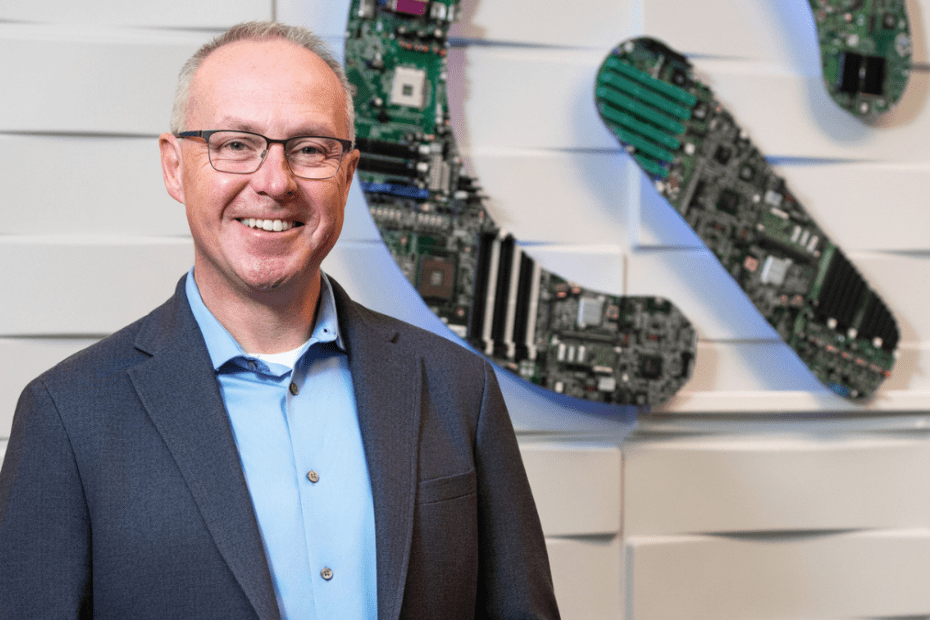
Matt Sidman – President, Teqworks. Local, 2002.
A reflection on the recession, remote work, AI, and what business leaders need when the rules change.
Over the last 24 years, I’ve watched businesses navigate three major inflection points: the Great Recession, the sudden shift to remote work during COVID, and today’s convergence of artificial intelligence and cybersecurity. While each challenge looked different on the surface, they shared a common theme: business leaders were forced to make difficult decisions in the face of uncertainty. Looking back, I’ve come to believe that technology is rarely the real challenge. The real challenge is knowing how to adapt when the rules change.
Introduction
When people ask me about the biggest challenges I’ve faced growing Teqworks over the last 24 years, they often expect me to talk about competitors, hiring, or technology.
The truth is that three distinct periods stand out in my mind. Not because they were difficult for Teqworks. Because they fundamentally changed what our clients needed from us.
Each period represented an inflection point where the rules changed. And each one reinforced an important lesson: technology is rarely the real problem.
2008: When Survival Became the Priority
The Great Recession changed everything.
Projects were delayed. Budgets were frozen. Businesses became cautious overnight. Many organizations were forced into difficult conversations about spending, staffing, and long-term viability.
For us, the question wasn’t how to sell more technology. The question was how to help clients survive.
Fortunately, several years earlier, we had made a significant shift in our business model. In 2003, we began moving clients away from the traditional break-fix approach and into managed services. Instead of waiting for something to break and then billing for the repair, clients paid a predictable monthly fee for ongoing support and maintenance.
At the time, many people thought we were crazy. The break-fix model was how the industry operated. But the move fundamentally changed the nature of our client relationships.
When the recession hit, one client in particular stood out. Their business relied heavily on seasonal and transactional revenue. As the economy slowed, their revenue slowed with it.
They weren’t dealing with a technology problem. They were dealing with a survival problem. Revenue had dropped dramatically, and the focus wasn’t on servers, networks, or upgrades. The focus was on keeping the business running, making payroll, and taking care of the people who depended on that business for their livelihood.
Because we had already built a managed relationship rather than a transactional one, we had options.
We weren’t sitting across the table debating invoices. We were sitting on the same side of the table trying to solve a business problem.
We adjusted services. We reworked expectations. We found ways to reduce costs while still protecting the systems they relied on to operate. The goal wasn’t to maximize revenue for Teqworks. The goal was to help them get through the storm.
One of the lasting effects of the recession was that many organizations deferred technology investments for years. They stopped upgrading systems, delayed maintenance, and postponed strategic projects because there never seemed to be enough certainty to move forward.
This client was different.
Because the relationship remained intact, the conversation never stopped. We continued helping them make thoughtful decisions, address risks, and plan for the future even during difficult times.
They kept their doors open. Their technology didn’t become neglected. And when business conditions improved, they weren’t starting from years behind.
Looking back, that experience reinforced one of the most important lessons of my career: when times get tough, clients don’t need another vendor. They need a partner who understands what is truly at stake.
Technology mattered, but it wasn’t the priority. Their employees, their families, and the future of their business were the priority.
2020: The Workplace Changed Overnight
The next inflection point came with COVID.
Unlike the recession, this wasn’t primarily an economic problem. It was an operational problem.
How do you continue running a business when nobody can come to the office?
For years leading up to 2020, we had been helping clients move toward cloud platforms, secure remote access, and modern collaboration tools.
At the time, many organizations viewed these initiatives as nice improvements. Then March arrived. Suddenly they became necessities.
Clients packed up their laptops, went home, and continued working.
Was it perfect? Of course not. There were password resets, connectivity issues, and plenty of uncertainty.
But the organizations that had prepared were able to adapt quickly while many others struggled to figure out how to operate.
The lesson wasn’t that remote technology is important. The lesson was that preparation matters.
The investments you make before a crisis often determine how well you navigate it.
Today: AI and Cybersecurity Are Colliding
The third inflection point is happening right now. And unlike the previous two, we don’t yet know how the story ends.
Artificial intelligence is moving at an incredible pace.
At the same time, cybercriminals are becoming more sophisticated, leveraging automation, AI-generated content, and increasingly convincing social engineering attacks.
Business owners are being bombarded with messages telling them they need AI immediately. Many are worried they’re already behind.
The reality is that most organizations still haven’t clearly defined what problem they’re trying to solve.
That’s what makes this era unique.
In 2008, the challenge was economic survival. In 2020, the challenge was operational continuity. Today, the challenge is discernment.
How do you embrace innovation without creating unnecessary risk? How do you move quickly without moving recklessly? How do you decide which opportunities deserve investment and which are simply noise?
Those are leadership questions as much as technology questions.
In many ways, AI reminds me of the early cloud conversations we were having before COVID. Everyone knows something important is changing. Everyone knows they need to pay attention. But many organizations are struggling to distinguish meaningful opportunity from marketing hype.
The businesses that will benefit most from AI will not be the ones that adopt it the fastest.
They will be the ones that thoughtfully align it to real business challenges, establish appropriate guardrails, and understand the risks alongside the rewards.
The Pattern I’ve Observed
When I look back across all three eras, I see a common theme.
The organizations that navigate change successfully are not always the fastest adopters. They’re not always the largest. They’re not always the ones with the biggest budgets.
They’re the ones that remain intentional.
They understand their business. They stay focused on outcomes. And they surround themselves with trusted advisors who can help them make informed decisions when the future becomes uncertain.
Technology will continue to evolve. Economic conditions will rise and fall. The way we work will change again. It always does.
The real challenge isn’t responding to change. It’s responding thoughtfully.
What Comes Next?
If I had to guess, the next major inflection point won’t be defined by a specific technology.
It will be defined by the intersection of economics, automation, and human value.
Businesses are already facing pressure from multiple directions. The cost of goods continues to rise. Labor remains one of the largest expenses for most organizations. Economic uncertainty has become a constant consideration rather than an occasional disruption. At the same time, artificial intelligence and automation are beginning to reshape work that was once considered uniquely human.
For the first time in my career, many business leaders are asking questions that go beyond technology.
What skills will still be valuable five years from now? How do we continue investing in people while remaining competitive? How do we leverage automation responsibly without losing the human elements that make our organizations successful?
Those aren’t technical questions. They’re leadership questions.
For decades, technology primarily automated physical work. Today, it is increasingly automating portions of cognitive work. Tasks that once required human analysis, communication, content creation, or decision support can now be completed faster and cheaper than ever before.
That creates incredible opportunity. It also creates real uncertainty.
Employees are wondering how their roles may change. Business owners are trying to understand how to remain competitive while continuing to fulfill their responsibility to the people who helped build their organizations.
We’ve seen similar themes before.
The recession forced organizations to protect livelihoods. The pandemic forced organizations to rethink how people worked. The AI era is forcing organizations to rethink the nature of work itself.
I don’t believe the winners of the next decade will be the organizations that automate everything they can.
I believe they’ll be the organizations that thoughtfully combine technology and human capability in ways that make both stronger.
The businesses that thrive will still invest in people. They’ll simply become more intentional about which skills they cultivate, which tasks they automate, and where human creativity, judgment, empathy, and leadership create lasting value.
Technology will continue to evolve. But business has always been about people. I don’t think that changes in the next chapter.
The Next Inflection Point Is Already Coming
If there’s one thing I’ve learned over the last 24 years, it’s that the next major disruption is always coming.
We don’t know what it will be.
In 2008, few business owners were preparing for a global financial crisis. In 2020, almost no one imagined their entire workforce would be sent home for an indefinite period of time.
Today, we’re wrestling with AI, cybersecurity, automation, and a pace of change unlike anything we’ve seen before.
Tomorrow, we may be wrestling with something even more fundamental: the changing value of human work in an increasingly automated world.
The specific challenge changes. The underlying question does not.
How do you make good decisions when the future is uncertain?
The organizations that thrive through disruption aren’t necessarily the ones with the most money, the newest technology, or the largest teams.
They’re the ones that stay focused on their mission, adapt when circumstances change, and surround themselves with trusted people who help them see around corners.
That’s ultimately what our role has become.
Yes, we implement technology. Yes, we protect systems. Yes, we help organizations adopt new tools.
But more importantly, we help business leaders make confident decisions during periods of uncertainty.
Because after two decades of recessions, pandemics, cyberattacks, and technology revolutions, I’ve come to believe that technology is rarely the hardest part.
The hardest part is balancing innovation with responsibility. It’s finding ways to embrace change without losing sight of the people who make our businesses, communities, and economies function.
Technology can make us faster. Technology can make us more efficient. Technology can even change the nature of work itself.
But leadership is still about people.
And no matter what the next inflection point looks like, I suspect that truth will remain unchanged.